01
Computer programmer
Years inside the working world, on the side of the desk that reviews resumes and sits in on interviews.
About
“My career has included being a computer programmer, a college math coach, and speaking to students.”
Three jobs, one thread running through all of them: watching capable young people struggle with the gap between finishing school and starting work. Not because they lacked ability — because nobody had told them how the process actually works.

Why this talk exists
After enough years of coaching students and sitting through enough hiring conversations, a pattern shows up.
The questions were never complicated. Should I put this on my resume? What do I wear? What do I bring? What do I say when they ask why I want the job? Is it rude to ask them a question back? These are small, answerable things — and not knowing them costs people jobs they were qualified for.
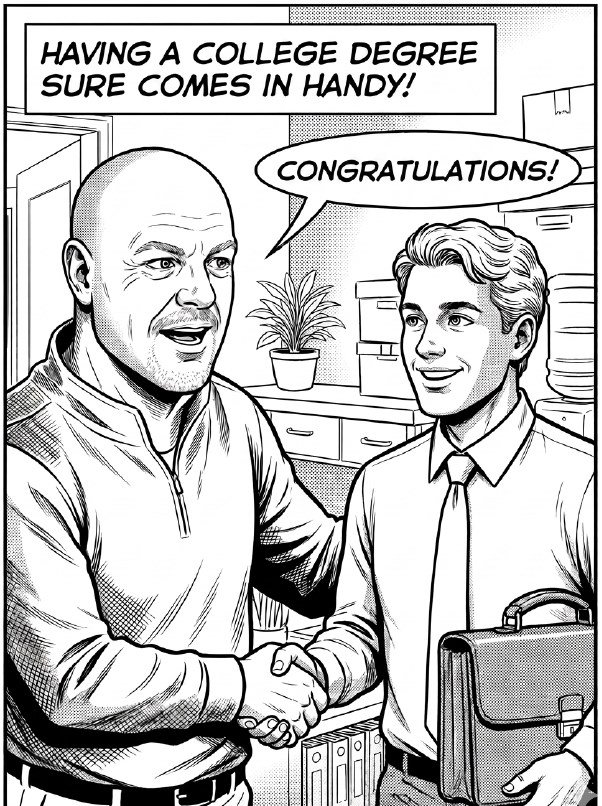
So the answers went into a book, drawn rather than written, because the students who most needed it were the least likely to read forty pages of career-advice prose. And then the book went on stage, because a room full of graduates will sit through twenty-one minutes in a way they will never sit through a chapter.
There is one more thing in there that most career advice leaves out: the trades. Not every degree leads to an office, and apprenticeship programs in fields like electrical work and carpentry let you earn a paycheck while you train. That is a real option, and it deserved real time.
Background
Years inside the working world, on the side of the desk that reviews resumes and sits in on interviews.
Working one-to-one with students, which is where the questions about life after graduation always came up.
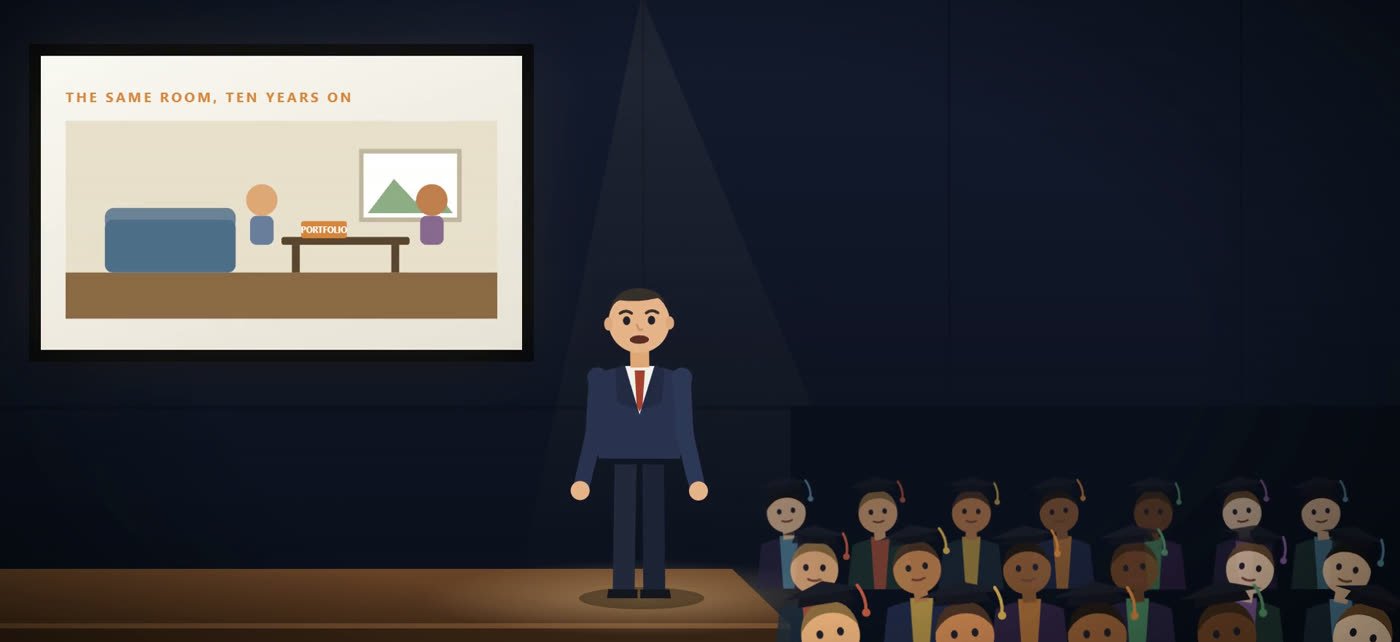
In front of rooms full of graduates, translating the hiring process into something practical.
The last word
The talk ends ten years out, in the same room where it started. It is the part audiences remember, and the reason it is worth twenty-one minutes of a graduating class’s time.